
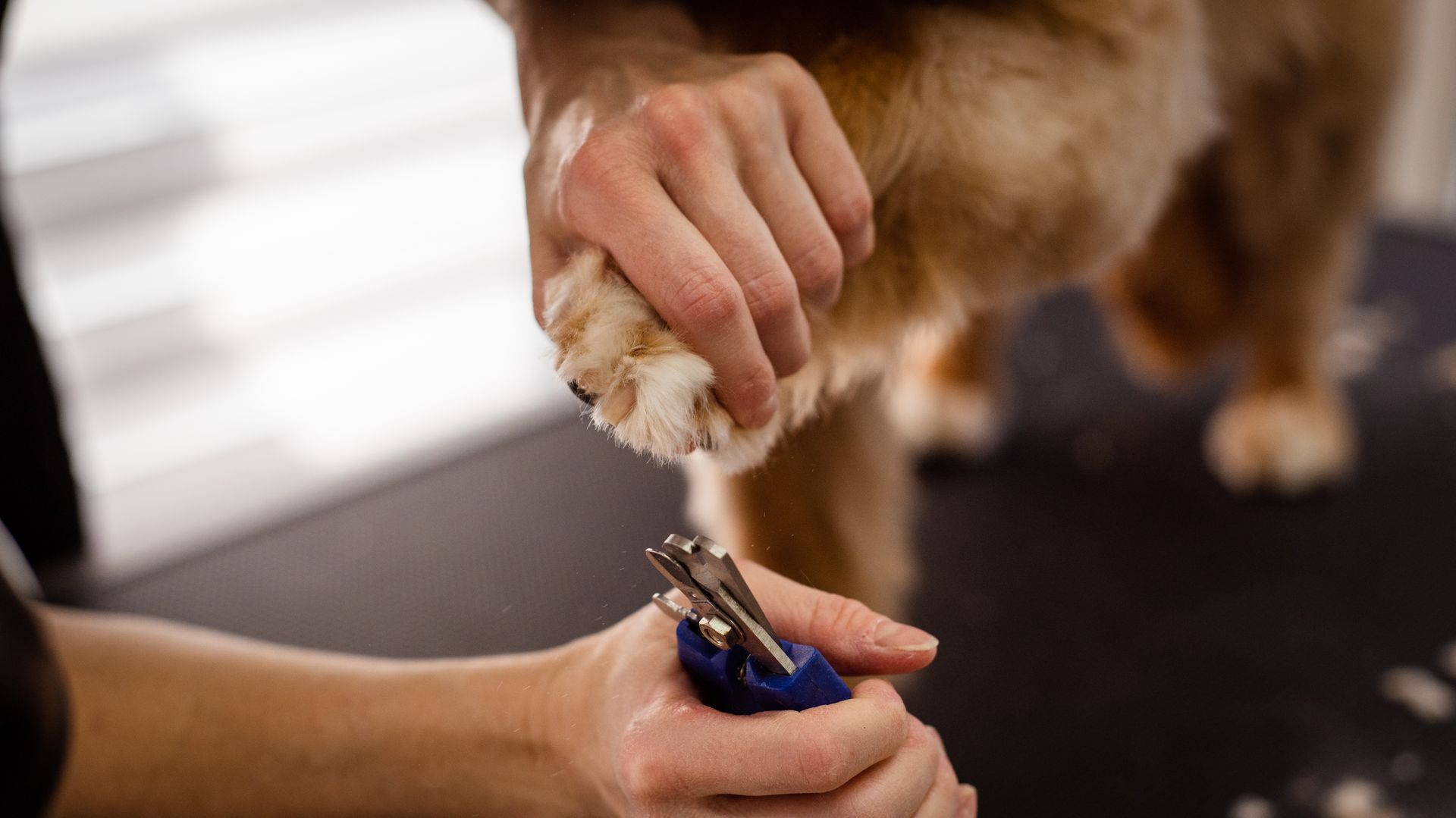
How to Cut Dog Nails at Home: A Stress-Free Grooming Guide

Learning how to cut dog nails at home is an essential skill for any pet parent looking to preserve their companion’s physical posture and overall health. In the wild, canines travel vast distances over varying, abrasive terrains—such as gravel, granite, and hard soil—which naturally grind down their claws. In domestic settings, however, most dogs walk primarily on soft carpets, grassy lawns, and smooth hardwood. Without natural wear, their claws grow continuously, eventually curving backward and altering the structural angle at which the paw contacts the ground. This misalignment strains the digits, places abnormal pressure on the skeletal frame, and can lead to chronic, painful osteoarthritis in the wrists and hips.
Despite the vital physiological importance of maintaining short claws, nail trimming remains one of the most stressful aspects of pet care. The resistance displayed by most dogs is a direct response to past painful experiences (namely, having the vascular “quick” severed) or an instinctual aversion to having their paws handled. Transforming this critical maintenance task into a calm, cooperative routine requires a systematic approach based on desensitization, proper anatomical understanding, and the right tools.
The Psychology of Stress Free Dog Grooming
To establish a successful routine, you must first master the principles of stress free dog grooming. Dogs possess a high density of nerve endings in their paws, making them exceptionally sensitive to touch, pressure, and restraint. If you approach your pet with tension, force, or a rushed agenda, their sympathetic nervous system will immediately trigger a fight-or-flight response.
The secret to reducing anxiety is to separate paw handling from the act of cutting entirely. Spend several days simply sitting with your pet during relaxed moments, gently touching and massaging their limbs, paws, and individual toes without any tools in sight. Pair this physical contact with high-value food rewards. Only when your pet is completely relaxed with paw manipulation should you introduce the clipping tools to the environment, allowing them to sniff and investigate the objects at their own pace.
Anatomical Foundations: How to Cut Dog Nails at Home
Executing this task safely requires a thorough understanding of the claw’s internal anatomy. A dog’s claw consists of two primary structures: the dead outer shell (composed of hard keratin) and the “quick,” an inner living core containing sensitive nerve endings and a direct blood supply. Severing the quick causes immediate, sharp pain and profuse bleeding, which is the primary reason why many dogs develop an intense phobia of nail clippers.
On light-colored claws, the quick is easily visible as a soft, pink shadow running through the center of the semi-translucent shell. On dark or black claws, however, the quick is completely hidden. When learning how to cut dog nails at home on dark claws, you must shave off microscopic layers of the nail tip, one thin slice at a time. After each cut, inspect the flat, cross-section of the cut nail. As you approach the quick, the dry, chalky white center of the nail will transition into a soft, dark, and slightly moist grey circle. This circular spot is the protective tissue surrounding the quick; once you observe this mark, you must immediately stop cutting.
To support your home grooming efforts and ensure your workspace remains clean, utilizing professional-grade tools is critical. A high-quality, slip-resistant grooming table mat (Premium Non-Slip Pet Grooming Table Mat) is highly useful for providing your pet with secure footing, reducing their slipping-induced anxiety during paw handling.
Practical Dog Nail Trimming Tips
Selecting the correct cutting tool and mastering your angles is essential for safety. Incorporate these practical dog nail trimming tips into your home routine to ensure a smooth, secure process:
- Choose the Right Tool: Plier-style clippers with a built-in safety guard are highly recommended for medium-to-large breeds, as they provide maximum leverage. For smaller dogs, scissor-style clippers offer superior control. Alternatively, rotary grinders (Dremel tools) are excellent for slowly grinding the claw down without the sudden pinching sensation of a blade.
- Maintain a 45-Degree Angle: Never cut straight across the claw. Always cut at a 45-degree angle, slanting away from the quick toward the tip of the nail. This preserves the natural, supportive curve of the claw when the paw rests on the ground.
- Keep Styptic Powder Accessible: Even under the care of a professional, accidents can occur. Always keep a container of styptic powder (or plain cornstarch) within reach. If you accidentally cut the quick, press a pinch of the powder directly onto the tip of the claw with firm pressure for thirty seconds to instantly stop the bleeding.
For those whose daily lives are joyfully defined by the active partnership of a growing canine companion, celebrating that partnership is a natural choice. To express your pet-owner pride and join our global network of animal advocates, explore the premium, exclusive premium dog t-shirts and hoodies at The Animal Republic, honoring their resilient spirit in classic black and white.
For detailed, professional resources on positive reinforcement training, cooperative care, and behavioral modification techniques, reference the guidelines published on the Association of Professional Dog Trainers website.
Securing Long-Term Cooperation
Overcoming paw sensitivity is a gradual process. If your dog is highly resistant, do not attempt to trim all twenty claws in a single session. Trimming just one claw per day, accompanied by calm praise and high-value rewards, is a far more effective way to build long-term confidence. By replacing physical force with systematic desensitization and anatomical accuracy, you can transform a highly stressful chore into a quiet, trust-building cooperative care routine.
If your pet has successfully recovered from an illness, or if you need to report an error, update public records, or query our community support services, please contact our administrative moderation team directly at [email protected].