
Beyond the Rainbow: The Surprising Origins and Meanings of Unicorns Across Cultures

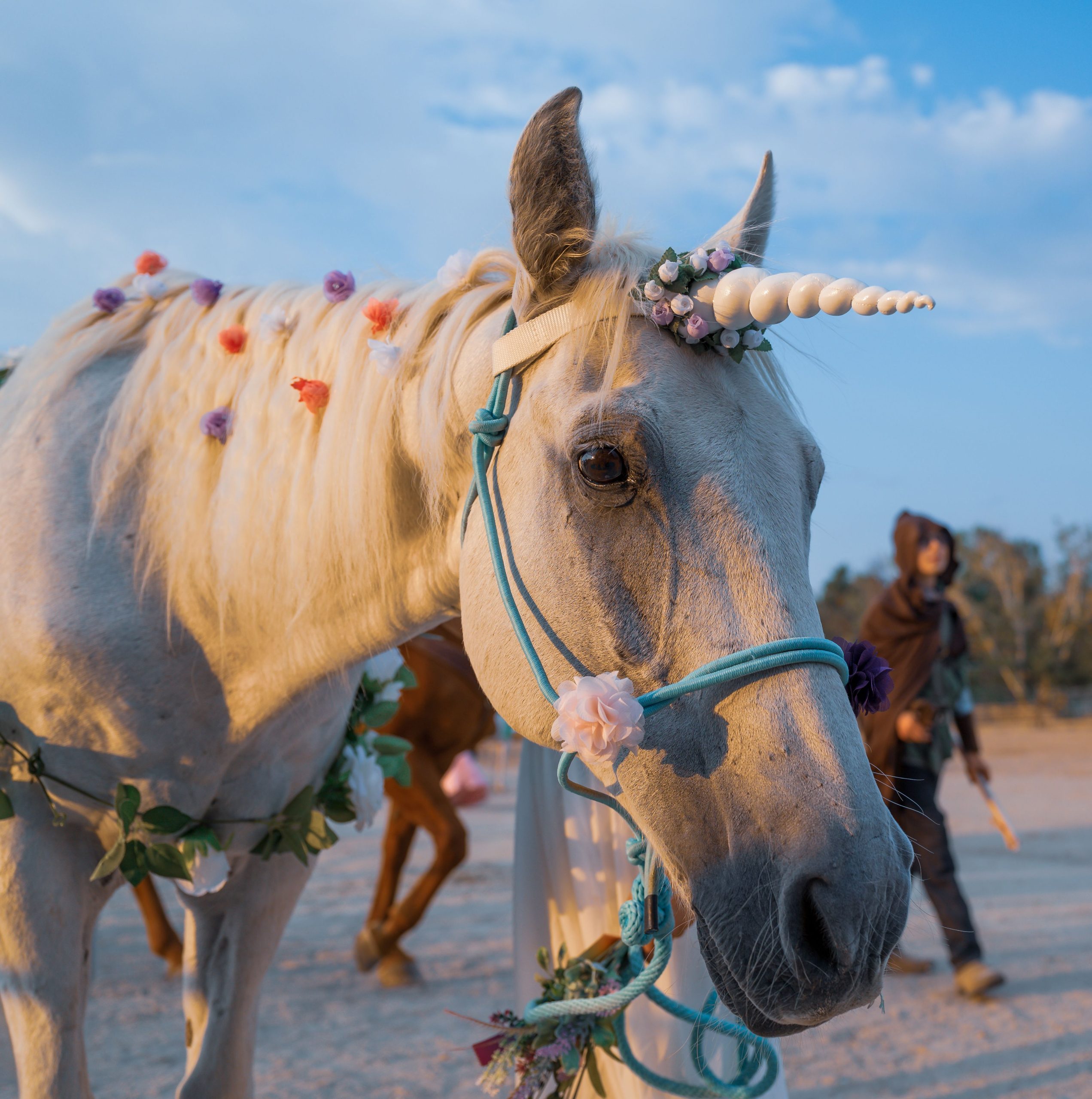
The modern unicorn is a creature of pastel pinks, rainbows, and sparkles, a commercialized icon of childhood innocence and whimsical fantasy. Yet, this sugary image is a recent cultural invention. For thousands of years, the single-horned beast was viewed not as a gentle, flying toy, but as a fierce, untamable, and deeply sacred force of nature. Across ancient Europe, the Middle East, and East Asia, the unicorn held a complex place in human imagination, representing everything from raw physical power to divine spiritual purity.
To trace the history of the unicorn is to embark on a journey through distorted travelers’ tales, medieval theology, and lucrative trade monopolies. By stripping away the layers of modern commercialism, we reveal a creature of striking duality: a beast too wild to be tamed by human force, yet willingly submissive to the ideals of purity and truth.
The Monoceros of Antiquity: A Beast of Raw Power
Unlike many mythical creatures, the unicorn was not born of religious folklore or epic poetry in Western antiquity. Instead, it was categorized as a real, biological animal. The earliest written accounts of the Western unicorn come from the Greek historian Ctesias in the fifth century B.C., who described the wild asses of India as having a single, multi-colored horn growing from their foreheads.
In his natural history texts, Pliny the Elder later formalized this creature under the name monoceros. Rather than a delicate white steed, Pliny’s monoceros was a terrifying, composite beast: it possessed the body of a horse, the head of a stag, the feet of an elephant, the tail of a boar, and a deep, low bellow. It was described as possessing a single black horn three feet in length, and Pliny noted that it was impossible to capture the animal alive. Modern historians believe these early accounts were highly distorted descriptions of the Indian rhinoceros or the straight-horned Arabian oryx, filtered through centuries of telephone-style oral storytelling along trade routes.
The Qilin: The East Asian Harmonizer
While Western antiquity feared the physical power of the monoceros, East Asian mythology revered a different single-horned entity: the Qilin (often translated as the Chinese Unicorn). The Qilin, however, is a chimera of a entirely different nature. Covered in scales or burning hide, with the body of a deer and the tail of an ox, the Qilin carries a single, flesh-covered horn that is incapable of inflicting harm.
In Chinese philosophy, the Qilin is the ultimate symbol of benevolence, prosperity, and cosmic harmony. Known as a “pure” beast, it is said to walk so gently that its hooves do not crush a single blade of grass, nor does it harm any living insect. According to legend, a Qilin only appears during the reign of a highly benevolent ruler or to signal the birth or passing of a great sage, such as Confucius. Here, the single horn represents a unified mind and the singular path of righteousness.
The Medieval Tapestry: Eroticism, Purity, and the Narwhal Trade
During the Middle Ages in Europe, the unicorn underwent a dramatic symbolic shift, becoming deeply entwined with Christian theology. Medieval bestiaries transformed the wild, dangerous beast of antiquity into an allegory for Christ. Because the unicorn was too strong and wild to be captured by hunters, legend dictated that it could only be tamed by a virgin. A pure maiden sitting in the forest would attract the beast, which would then approach calmly, lay its head in her lap, and fall asleep, leaving it vulnerable to the hunters’ spears.
This narrative, celebrated in the famous “Hunt of the Unicorn” tapestries, carried a dual charge. To the Church, it represented the Incarnation and the submission of divine power to earthly purity. To secular courts, it served as a highly sophisticated, courtly allegory for love, romance, and the taming of wild desires.
This spiritual obsession fueled a highly lucrative, highly fraudulent trade in “alicorn”—the physical horn of the unicorn. European monarchs and wealthy merchants paid fortunes for these horns, believing they possessed the power to neutralize any poison. In reality, these expensive relics were the long, spiral tusks of arctic narwhals, harvested by Norse traders in Greenland and sold to gullible European elites at prices exceeding their weight in gold. The illusion was only shattered as European exploration of the Arctic expanded in the seventeenth century, revealing the true marine origin of the magic horns.
For those who find themselves captivated by the deeper, more complex histories of our collective mythologies, carrying a symbol of that enduring legacy is a compelling choice. To showcase your appreciation for this ancient, powerful icon, explore our premium Unicorn Graphic Apparel at The Animal Republic, celebrating the raw, mythological power of the unicorn.
The Enduring Icon of the Untamed
The journey of the unicorn from a dangerous beast in the Indian forests to a medieval religious symbol, and finally to a modern pastel icon, reflects the shifting desires of human culture. Yet, beneath the commercial gloss of the modern toy industry, the core of the ancient myth remains intact. The unicorn is, at its heart, a symbol of the wild, untamable aspects of the natural world—a reminder that some things are too beautiful and too powerful to ever be fully conquered by human hands.
To deepen your understanding of medieval lore and the transition of wildlife mythology into classical art, exploring comprehensive reference texts on historical bestiaries (The Book of Beasts : Being a Translation from a Latin Bestiary of the Twelfth Century) can provide rich, scholarly insights into how these legends shaped our modern culture.