
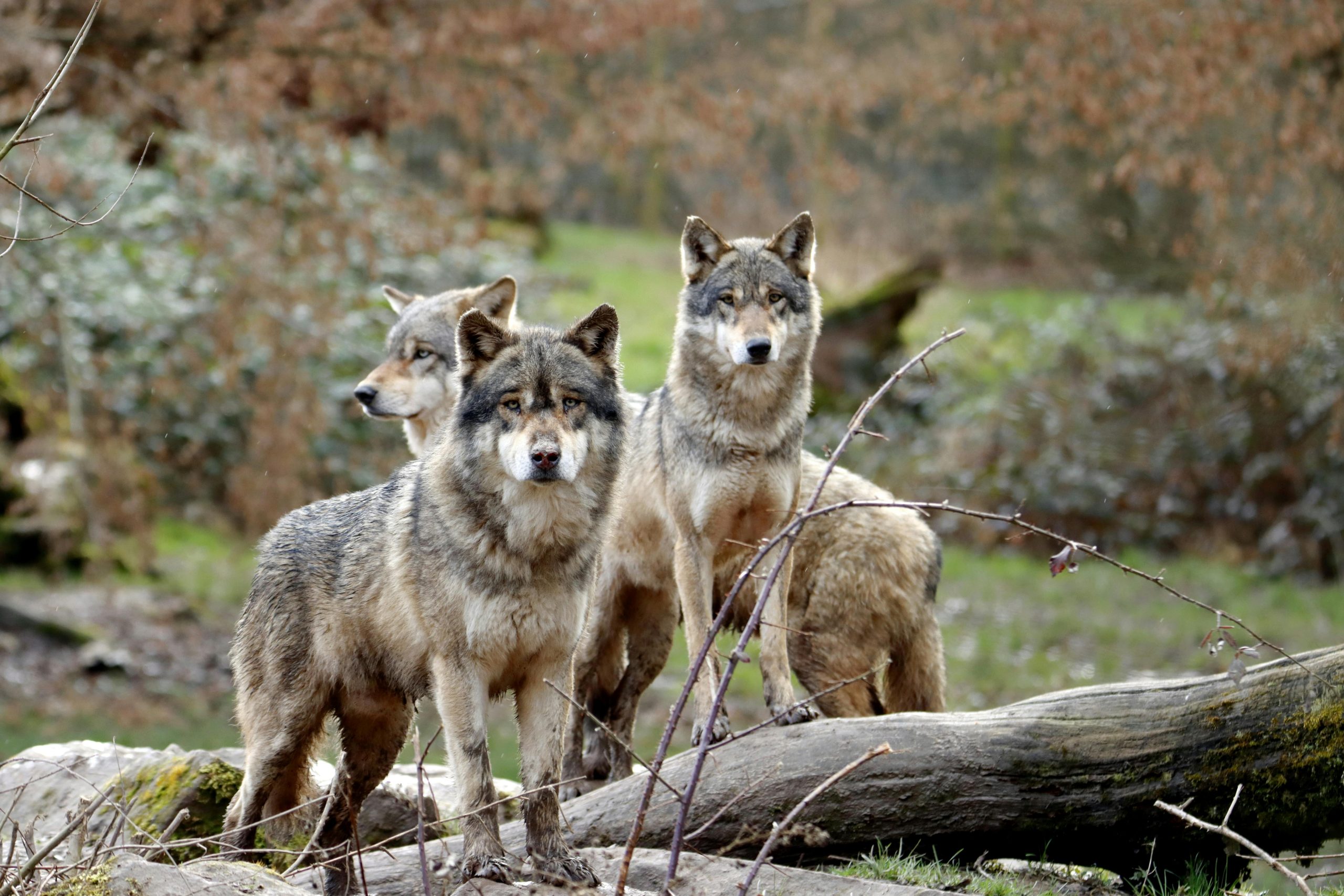
Why Do Wolves Howl? 5 Surprising Facts About Wolf Pack Communication

Few sounds in the natural world evoke as much primal intrigue as the long, undulating howl of a gray wolf cutting through a quiet forest. For centuries, this vocalization was cast in the shadow of folklore and gothic horror, parsed as a lonely lament or a sinister warning. Yet, to wildlife biologists studying apex predators, the howl is recognized as something far more complex: a highly sophisticated, multi-tiered acoustic tool engineered for survival and social order.
Wolves are highly social pack animals that navigate dense, unforgiving terrains where visual contact is frequently impossible. To maintain order across hundreds of square miles of wilderness, they rely on a complex network of vocalizations. Here is what science has revealed about the mechanics of the howl, and the surprising ways wolves communicate within their packs.
1. They Are Not Howling at the Moon
Perhaps the most stubborn myth in animal folklore is that wolves howl at the full moon. While the silhouette of a howling wolf framed by a bright lunar disc is a staple of popular culture, the association is entirely coincidental. Wolves are crepuscular and nocturnal animals, meaning they are most active during twilight and nighttime hours when the moon happens to be visible.
When a wolf howls, it tilts its head upward and backward. This posture has nothing to do with looking at the sky; rather, it is a matter of pure acoustics. Straightening the windpipe and neck allows the wolf to maximize vocal projection, sending the sound waves up and over dense forest canopies and undulating landscapes to ensure the howl travels as far as possible—sometimes up to ten miles in open terrain.
2. Every Wolf Possesses a Unique Vocal Signature
To human ears, a chorus of howls may sound like a uniform wall of sound. To a wolf, however, each howl is as distinct as a human voice. Wildlife researchers utilizing acoustic analysis have confirmed that wolves possess individual vocal signatures, defined by unique variations in pitch, frequency, and modulation.
This vocal individuality allows pack members to identify exactly who is calling from miles away without making visual contact. Whether it is an alpha pair coordinating a hunt or a subordinate member signaling its location, the unique pitch of the howl ensures that the receiving pack members know precisely who is transmitting the message.
3. The Chorus Effect Creates a Calculated Illusion
When a pack howls together, they engage in a phenomenon known as a chorus howl. Rather than howling on the same pitch, the wolves deliberately harmonize, with each member vocalizing on a slightly different note and frequency. This acoustic variance is a deliberate survival strategy designed to mislead rival packs.
By shifting pitches and overlapping their vocalizations, a relatively small pack of four or five wolves can create an acoustic illusion that makes them sound like a massive, formidable horde of a dozen or more. This prevents neighboring packs from encroaching on their territory, as rival packs will hear the complex chorus and assume the territory is heavily guarded by a superior force.
4. Howling Serves as a Cooperative Vocal GPS
The wilderness is a dangerous place for a solitary wolf. When pack members become separated during a high-speed hunt or a territorial dispute, the howl acts as a highly efficient localization beacon. It is the pack’s cooperative GPS system.
When a separated wolf howls, it signals its safety and its need to reunite. The remaining pack members will often reply in kind, establishing a series of acoustic coordinates. By measuring the direction, volume, and decay of the returning howls, the lost wolf can navigate back to its pack across dense forests and mountain passes, avoiding the danger of wandering into rival territory.
5. They Howl Out of Social Affection and Care
For a long time, it was believed that howling was a purely instinctual, mechanical response to external stimuli. However, a groundbreaking study published by researchers at the Veterinary Medicine University of Vienna revealed that howling carries a strong emotional component. Wolves howl more frequently when they are separated from pack members with whom they share strong social bonds.
By measuring hormone levels and tracking social interactions, researchers discovered that the rate of howling was not driven by stress or anxiety, but rather by the strength of the relationship between the separated wolves. In short, wolves howl because they miss their companions. It is an active expression of social cohesion, maintaining the invisible thread that holds the pack together.
For those drawn to the enduring mystique of the wild, carrying a symbol of the pack is a natural instinct. To showcase your appreciation for these apex predators and their sophisticated survival mechanics, explore the premium Wolf Graphic Apparel available at The Animal Republic, where wildlife passion meets minimalist design.
Decoding the Language of the Wild
As research into animal communication advances, the howl of the wolf continues to shed its ancient myths in favor of biological wonder. It is not a cry of loneliness or anger, but a highly evolved language of cooperation, protection, and deep-seated social affinity. Understanding the howl is our window into the complex, silent agreements that govern the wild.
To deepen your understanding of predator dynamics and wildlife communication systems, utilizing comprehensive academic reference guides on canine behaviors (Principles of Wildlife Management) can provide invaluable technical insights into how these species navigate their environments.